⚠️ We are closely monitoring the recent Ebola outbreak in the Democratic Republic of the Congo. We extend our deepest sympathies to the Congolese people during this challenging time, and our thoughts and steadfast support remain with the affected communities.
Internal Medicine
MHF Patient Guide

Internal Medicine

Internal medicine is a medical specialty focused on the prevention, diagnosis, and treatment of adult diseases. Internists are equipped to handle a broad spectrum of illnesses, ranging from acute medical conditions to complex chronic diseases involving multiple organ systems. For international patients seeking care, internal medicine specialists often serve as the primary coordinators of comprehensive healthcare, ensuring that all aspects of a patient's well-being are managed cohesively. They work closely with other specialists to provide integrated care, particularly for conditions that are difficult to diagnose or manage.

461
specialist profiles
10+
hospitals to explore
EN / FR
bilingual coordination
24–48h
initial response target

Understand the specialty

Clinical Overview and Direction

Internal medicine is a medical specialty focused on the prevention, diagnosis, and treatment of adult diseases. Internists are equipped to handle a broad spectrum of illnesses, ranging from acute medical conditions to complex chronic diseases involving multiple organ systems. For international patients seeking care, internal medicine specialists often serve as the primary coordinators of comprehensive healthcare, ensuring that all aspects of a patient's well-being are managed cohesively. They work closely with other specialists to provide integrated care, particularly for conditions that are difficult to diagnose or manage.

Conditions Commonly Evaluated

  • Hypertension (High blood pressure)
  • Type 2 Diabetes Mellitus
  • Chronic obstructive pulmonary disease (COPD)
  • Asthma
  • Coronary artery disease
  • Thyroid disorders
  • Chronic kidney disease
  • Gastroesophageal reflux disease (GERD)
  • Osteoarthritis
  • Unexplained systemic symptoms (e.g., chronic fatigue, weight loss)

When to Seek Urgent Local Care

Do not delay urgent care while arranging international travel.

  • Sudden and severe chest pain or pressure.
  • Difficulty breathing or severe shortness of breath.
  • Sudden numbness, weakness, or paralysis in the face, arm, or leg.
  • Unexplained, severe abdominal pain.
  • High fever accompanied by confusion or a stiff neck.

Diagnostics and Useful Records

Complete records help the clinical team prepare a more useful opinion before travel.

Comprehensive metabolic panel (CMP)
Complete blood count (CBC)
Lipid profile testing
Electrocardiogram (ECG or EKG)
Thyroid function tests
Hemoglobin A1c test for diabetes management
Pulmonary function tests
Chest X-rays and imaging studies
Urinalysis
Endoscopic evaluations (often coordinated with gastroenterologists)

Treatment Approaches to Discuss

Treatment depends on the confirmed diagnosis, overall health, investigations, goals and specialist-team assessment.

Pharmacological management of chronic diseases.
Lifestyle and dietary modification counseling.
Insulin therapy and diabetes management plans.
Blood pressure regulation therapies.
Inhaler and respiratory therapy for asthma and COPD.
Preventative care and adult immunizations.
Pain management strategies for chronic conditions.
Coordination of multidisciplinary treatment plans.

Selecting the Right Specialist

When selecting an internal medicine specialist, look for board-certified physicians with extensive experience in diagnosing and managing complex, multi-system diseases. It is important to choose a doctor who is affiliated with a reputable hospital known for comprehensive diagnostic facilities and multidisciplinary care. Consider specialists who have a proven track record of treating international patients, as they will be more attuned to the logistical and cultural nuances of cross-border healthcare. A good internist should prioritize clear communication, taking the time to explain your condition and treatment options in a way that you fully understand.

Preparing for Evaluation

Before traveling for an internal medicine consultation, it is essential to gather all relevant medical records, including past diagnoses, recent laboratory results, imaging reports, and a comprehensive list of all current medications with their dosages. Prepare a detailed medical history that highlights any chronic conditions, previous surgeries, and family medical history. Write down a timeline of your symptoms, noting when they began and what exacerbates or relieves them. It is also beneficial to arrange for your medical documents to be translated into English if they are in another language, ensuring the medical team can fully understand your health background upon arrival.

Recovery and Continuity of Care

Recovery in the context of internal medicine often involves long-term management and lifestyle adjustments rather than immediate post-surgical healing. Following your consultation and the establishment of a treatment plan, you will likely need to adhere strictly to prescribed medications and dietary recommendations. Regular follow-up appointments, which may sometimes be conducted via telemedicine after you return home, are crucial to monitor progress and adjust treatments as necessary. Embracing recommended lifestyle changes, such as improved nutrition, regular physical activity, and stress management, plays a vital role in stabilizing chronic conditions and enhancing overall quality of life.

Discharge summary
Medication plan
Remote follow-up

Questions to Ask the Clinical Team

1What are the most likely causes of my current symptoms?
2Are there any lifestyle changes I should make immediately to improve my condition?
3How will the prescribed medications interact with each other and with my current prescriptions?
4What specific diagnostic tests do I need, and what will they reveal?
5How frequently should I schedule follow-up appointments to monitor my chronic condition?
6Can my follow-up care be coordinated with my local doctor back home?
7What warning signs should prompt me to seek immediate medical attention?


Explore Profiles

Related Specialists

View all 461 profiles
Dr. Athar Parvez Ansari

Dr. Athar Parvez Ansari

Associate Director - Internal Medicine

Sarvodaya Hospital

View profile
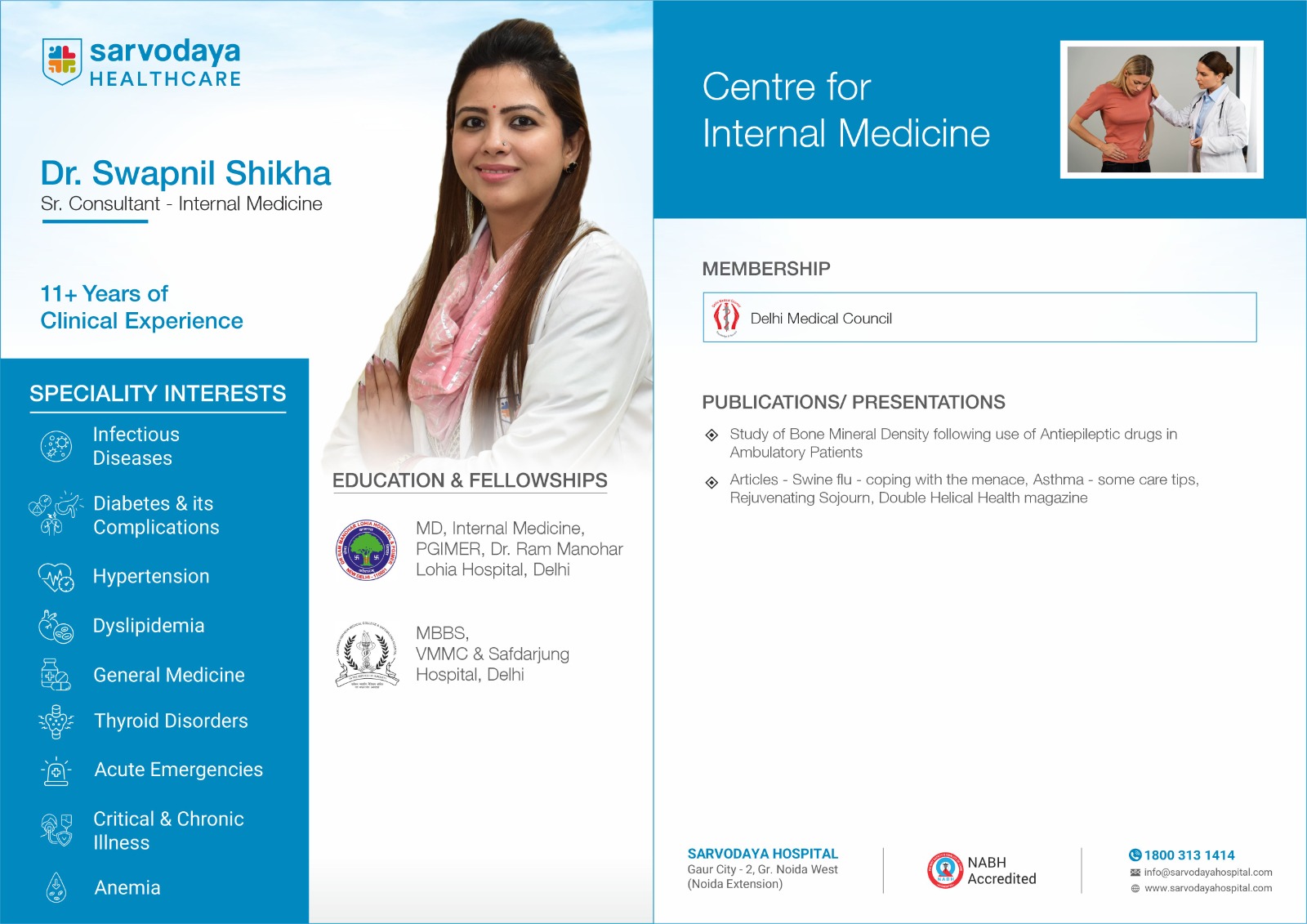
Dr. Swapnil Shikha

Dr. Swapnil Shikha

Sr. Consultant - Internal Medicine

Sarvodaya Hospital

View profile
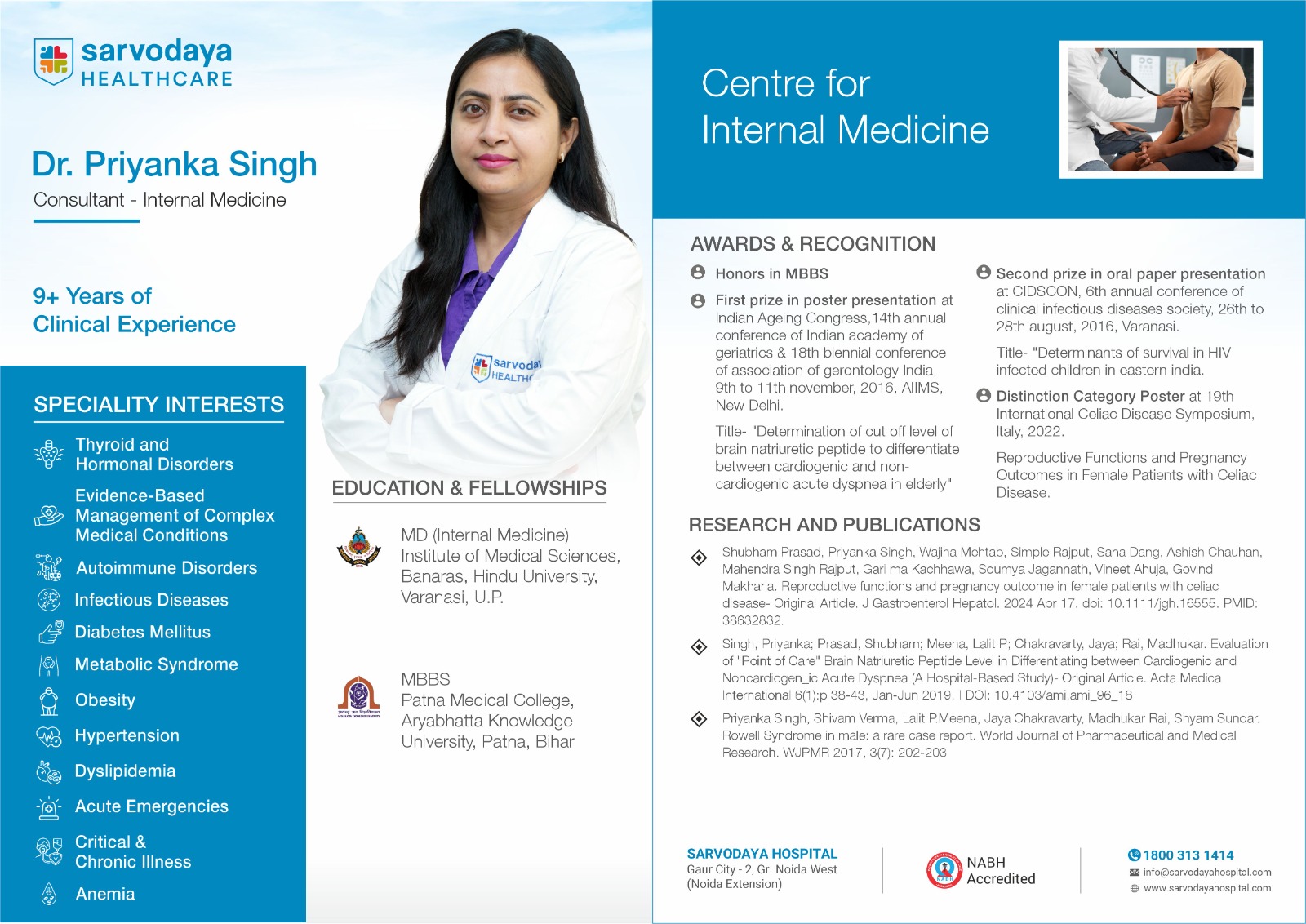
Dr. Priyanka Singh

Dr. Priyanka Singh

Consultant - Internal Medicine

Sarvodaya Hospital

View profile
Dr. Akanksha Rastogi

Dr. Akanksha Rastogi

Principal Consultant, Internal Medicine

Medanta - The Medicity

View profile
Dr. Asmita Kapoor

Dr. Asmita Kapoor

Visiting Consultant, Dermatology

Medanta - The Medicity

View profile
Dr. Bhrigu Jain

Dr. Bhrigu Jain

Associate Consultant, Internal Medicine

Medanta - The Medicity

View profile

Compare Facilities

Hospitals Offering This Specialty

FAQ

Frequently Asked Questions

What is the difference between an internist and a general practitioner?

While both provide primary care, an internist specializes specifically in adult medicine and often has deeper training in managing complex, chronic, and multi-system diseases, whereas a general practitioner may treat patients of all ages, including children.

Will I need to see other specialists besides the internist?

It is possible. Internists often act as the central coordinator of your care. If your condition requires specialized surgical intervention or highly specific targeted therapy, your internist will refer you to and collaborate with the appropriate specialist.

How long will I need to stay in India for a comprehensive internal medicine evaluation?

The duration varies depending on the complexity of your health issues and the necessary diagnostic tests. A thorough evaluation and initial stabilization plan typically take between one to two weeks, but your doctor will provide a more accurate timeline upon initial assessment.

Can I continue my treatment plan in my home country?

Yes, the goal is to create a sustainable long-term treatment plan. Your medical team in India will provide detailed medical reports and treatment guidelines that you can share with your local healthcare provider to ensure continuity of care.

What should I do if I experience a flare-up of my chronic condition while traveling?

It is vital to carry an adequate supply of your medications and a summary of your medical history. If a severe flare-up occurs, seek medical attention immediately at the nearest hospital and inform them of your ongoing treatment plan.

Are diagnostic tests performed during the consultation covered by my initial package?

Medical packages usually cover standard consultations, but extensive diagnostic tests or specialized imaging may incur additional costs. It is recommended to clarify what is included in your financial estimate with your care coordinator beforehand.

Editorial Transparency

Educational Information, Not a Diagnosis

This guide summarizes general information from established medical sources. It does not replace consultation, diagnosis or an individualized treatment plan. Options, costs, timelines and possible outcomes depend on clinical assessment.

Reviewed: 2026-08-27

Ready to Organize a Specialist Review?

Send the available reports. MHF helps identify suitable teams and compare responses before any decision.

Chat on WhatsApp