⚠️ We are closely monitoring the recent Ebola outbreak in the Democratic Republic of the Congo. We extend our deepest sympathies to the Congolese people during this challenging time, and our thoughts and steadfast support remain with the affected communities.
Nephrology
MHF Patient Guide

Nephrology

Nephrology is a medical specialty focused on the diagnosis, treatment, and management of kidney diseases and conditions affecting kidney function. The kidneys play a vital role in filtering waste from the blood, balancing body fluids, and regulating blood pressure. Nephrologists manage acute and chronic kidney issues, providing comprehensive care to preserve kidney function and manage related systemic complications.

48
specialist profiles
9+
hospitals to explore
EN / FR
bilingual coordination
24–48h
initial response target

Understand the specialty

Clinical Overview and Direction

Nephrology is a medical specialty focused on the diagnosis, treatment, and management of kidney diseases and conditions affecting kidney function. The kidneys play a vital role in filtering waste from the blood, balancing body fluids, and regulating blood pressure. Nephrologists manage acute and chronic kidney issues, providing comprehensive care to preserve kidney function and manage related systemic complications.

Conditions Commonly Evaluated

  • Chronic kidney disease (CKD)
  • Acute kidney injury (AKI)
  • Kidney stones (nephrolithiasis)
  • Glomerulonephritis
  • Polycystic kidney disease (PKD)
  • Diabetic nephropathy
  • Hypertensive nephrosclerosis
  • Nephrotic syndrome

When to Seek Urgent Local Care

Do not delay urgent care while arranging international travel.

  • Sudden decrease in urine output or inability to urinate
  • Severe, sudden swelling in the legs, ankles, or face
  • Extreme fatigue, confusion, or difficulty breathing
  • Blood in the urine accompanied by severe back or flank pain

Diagnostics and Useful Records

Complete records help the clinical team prepare a more useful opinion before travel.

Blood tests for kidney function (creatinine, eGFR, BUN)
Urinalysis to check for protein, blood, or infection
24-hour urine collection
Renal ultrasound
CT scan of the kidneys, ureters, and bladder
Kidney biopsy
Magnetic resonance angiography (MRA) of renal arteries

Treatment Approaches to Discuss

Treatment depends on the confirmed diagnosis, overall health, investigations, goals and specialist-team assessment.

Medication management for blood pressure and kidney protection
Dietary modifications and fluid management
Hemodialysis
Peritoneal dialysis
Kidney transplant evaluation and management
Management of electrolyte imbalances
Treatment of anemia related to kidney disease

Selecting the Right Specialist

When selecting a nephrologist or a kidney care center, look for specialists who are board-certified and have extensive experience in treating your specific condition, whether it is chronic kidney disease, dialysis management, or transplant care. Consider hospitals that offer comprehensive multidisciplinary teams, including dietitians, social workers, and specialized nurses. If you require a kidney transplant, seek out centers with established transplant programs and strong track records of successful outcomes and patient support.

Preparing for Evaluation

Before traveling for nephrology care, compile all relevant medical records, including recent blood and urine test results, imaging studies (like ultrasounds or CT scans), and any history of kidney biopsies. Prepare a complete list of your current medications, as many drugs can affect kidney function. It is important to maintain your prescribed diet and fluid restrictions during travel. Consult with your local doctor about the safety of travel, especially if you are currently on dialysis, to arrange for treatment sessions at your destination.

Recovery and Continuity of Care

Recovery and ongoing management in nephrology depend highly on the specific condition and treatment received. For those starting dialysis, there is a period of adjustment to the new routine and potential fatigue. Following a kidney transplant, patients require a hospital stay and close monitoring to prevent rejection and infection, along with lifelong immunosuppressive medication. Regardless of the treatment, long-term success requires strict adherence to dietary guidelines, regular monitoring of kidney function through blood and urine tests, and consistent follow-up appointments.

Discharge summary
Medication plan
Remote follow-up

Questions to Ask the Clinical Team

1What is my current level of kidney function, and what does it mean for my health?
2Are there specific dietary changes I need to make immediately?
3How will my current medications affect my kidneys?
4What are the signs that my kidney disease is progressing?
5If I need dialysis in the future, what are the different options available to me?
6Am I a candidate for a kidney transplant, and what is the evaluation process?
7How often will I need to have my blood and urine tested?

Explore Profiles

Related Specialists

View all 48 profiles
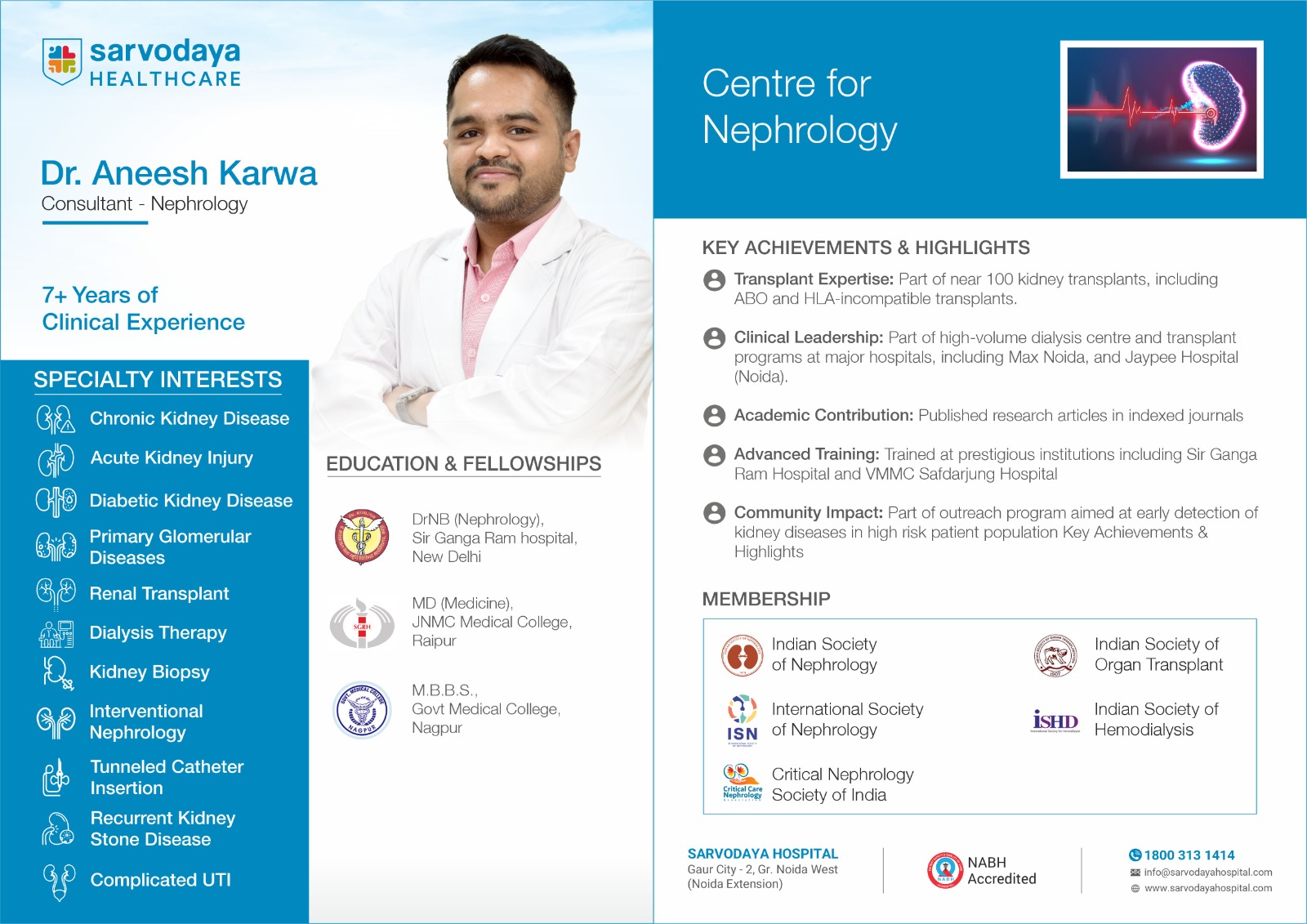
Dr. Aneesh Karwa

Dr. Aneesh Karwa

Consultant - Nephrology

Sarvodaya Hospital

View profile
Dr. Abhijeet Jha

Dr. Abhijeet Jha

Consultant, Renal Care

Medanta - The Medicity

View profile
Dr. Abhyuday Singh Rana

Dr. Abhyuday Singh Rana

Consultant, Renal Care

Medanta - The Medicity

View profile
Dr. Amita Jain

Dr. Amita Jain

Associate Director, Renal Care

Medanta - The Medicity

View profile
Dr. Asheesh Kumar Gupta

Dr. Asheesh Kumar Gupta

Associate Consultant, Renal Care

Medanta - The Medicity

View profile
Dr. Debabrata Mukherjee

Dr. Debabrata Mukherjee

Senior Director, Renal Care

Medanta - The Medicity

View profile

Compare Facilities

Hospitals Offering This Specialty

FAQ

Frequently Asked Questions

What is the difference between acute kidney injury and chronic kidney disease?

Acute kidney injury is a sudden, temporary loss of kidney function, often reversible with prompt treatment. Chronic kidney disease is a gradual, progressive loss of kidney function over months or years, which is usually irreversible but can be managed to slow progression.

Can kidney disease be cured?

Most chronic kidney diseases cannot be completely cured. However, with proper medical management, lifestyle changes, and medications, the progression of the disease can often be significantly slowed, and symptoms can be controlled.

Why is diet so important in kidney disease?

When kidneys are damaged, they cannot efficiently remove waste products and excess minerals from the blood. A specialized diet helps reduce the buildup of substances like sodium, potassium, and phosphorus, thereby reducing the workload on the kidneys and preventing complications.

What does dialysis do?

Dialysis is a medical procedure that artificially performs some of the functions of healthy kidneys. It removes waste products, excess salt, and water from the blood, helping to maintain safe levels of certain chemicals in the body and controlling blood pressure.

Are there alternatives to dialysis if my kidneys fail?

The primary alternative to dialysis for end-stage renal disease is a kidney transplant. In some cases, patients may choose conservative management, which focuses on symptom control and quality of life without initiating dialysis, though this does not prolong life.

How does high blood pressure affect the kidneys?

High blood pressure can damage the blood vessels in the kidneys over time, reducing their ability to work properly. Conversely, kidney disease can also cause high blood pressure, creating a cycle that can lead to further kidney damage if left uncontrolled.

Editorial Transparency

Educational Information, Not a Diagnosis

This guide summarizes general information from established medical sources. It does not replace consultation, diagnosis or an individualized treatment plan. Options, costs, timelines and possible outcomes depend on clinical assessment.

Reviewed: 2026-08-27

Ready to Organize a Specialist Review?

Send the available reports. MHF helps identify suitable teams and compare responses before any decision.

Chat on WhatsApp